
Boundaries Between Priests and Laity
It's a shared responsibility.

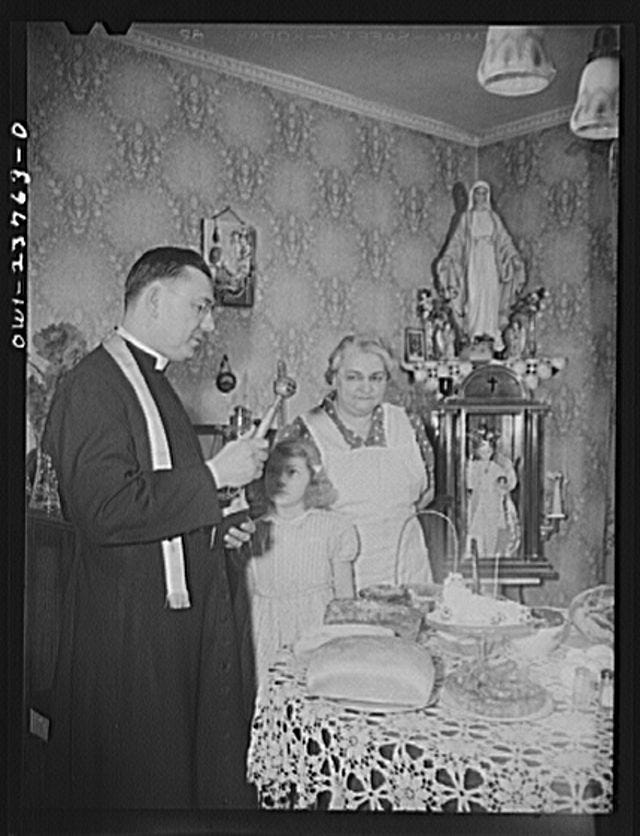
One of the things that my husband and I most appreciate about our pastor is that he has a firm sense of boundaries— how and when you can contact him, and how he’ll act once you do. He’s there when you need him; when I had a second trimester miscarriage, we had no trouble reaching him and having him perform a burial in our local cemetery. He’s friendly and approachable, but he also has very clear and consistent rules about things like who’s allowed in or near the rectory, when his days off are, and who has his personal phone number. When he acts as a confessor1, he doesn’t give advice to the penitent2— he just offers absolution. When he says mass, he doesn’t improvise or do anything outside of ‘do the red, say the black.’
I’ve met many priests who don’t have a similar sense of boundaries. They hand out their personal phone number, give ill-informed advice, take liberties with the liturgy3, let people use the bathroom in the rectory during the parish picnic4, and seem to struggle with perpetual burnout because they can’t bring themselves to say “no” to anything. They seem to have little awareness of where the line between their vocation and their reality of living as a normal, fallen human being is.
We’ve been discerning a new call to ministry as a family lately, and as a result my husband has been searching for a spiritual director to help him navigate things. He’s come to the realization that many priests make themselves insanely difficult to reach. They don’t have clear ways to contact them, or they take a week or two to finally email back that they’re sorry, but they can’t take on a directee at the moment.
I mentioned my husband’s search in an online chat I’m in, and asked if anyone had any leads for people willing to spiritually direct. I was mildly horrified when someone said, “just ask a priest if you can talk to them about one thing, then repeat until you have a spiritual director! Let the relationship just sort of naturally develop; you’re less likely to scare them off than actually asking them to take on a regular directee. And you can do this with any priest!”
I believe that this advice was offered in good faith, but I read it as, “Don’t be honest about your intentions, and manipulate the priest, who may or may not be trained as a spiritual director5 and might have any number of other things going on in their lives, into taking you on.”
No wonder my husband can’t find anyone.
A lot has been made of how clericalism skews and poisons attitudes in the Church. It is usually portrayed as an advantage that a priest has over the laity in the form of special treatment, an assumption of personal holiness, or even a certain amount of legal and moral immunity when and if he commits wrongdoing. This sort of clericalism exists, (more in some communities and cultures than others), but there’s another side of clericalism that I don’t see discussed as often.
Rather than giving unusual consideration, this type of clericalism dehumanizes the priest, by expecting an unrealistic or unhuman amount of availability to the laity. Priests are assumed to be somehow universally holy and available. This assumption can lead to an expectation of a nearly supernatural amount of patience and kindness from someone who, at the end of the day, is just a man. There can also be a tendency to foist responsibility for an individual’s spiritual life onto him, when it ought to rest on the individual themselves— “I don’t want to upset my family when I make a decision about x…I’ll just ask Father and do whatever he says, then I can put the responsibility of the decision on him instead of shouldering it myself.6” The priest is treated as a universally available service or as a stand-in for our own moral and personal responsibility rather than as a person.
When that sort of exploitive clericalism from the laity runs headlong into a chronic lack of personal and professional boundaries7, you have a recipe for burnout at best, and an inherently abusive situation (either for the priest or the laity he’s meant to serve) at worst. I still remember the house blessing a college classmate arranged for her new apartment, during our Catholic sorority sleepover,8 the priest standing in her living room amidst a group of college girls sprawled around on the furniture in various types of sleepwear. That never would have happened with any other male in this student’s social circle, but because this man was a priest, he was allowed access to a situation that was inherently inappropriate for him to have.
From the perspective of a lay woman, I wonder if part of the solution to this problem is to treat priests with the same basic professional boundaries and consideration that we would give any other specifically trained professional that we call on. Just as we shouldn’t pester someone we know is a doctor or psychiatrist9 to give us care outside of the boundaries set by their office hours, we should not expect priests to be a stand-in for our consciences or to be perpetually available in any situation we may wish him to enter without the ability to reasonably say “no.”
Yes, a priest by nature of his vocation belongs to the laity well beyond the way a paid professional belongs to his clients. A priest generally doesn’t enjoy the luxury of having set “on call” hours for dealing with sudden emergencies the way a doctor does. When a parishioner is dying at 2am, or someone calls the office looking for their first confession in 20 years, a priest has an obligation to minister to them even if it’s the third or fourth time this week that it’s happened. The vocational call is a primary, rather than secondary, calling and takes a different priority in the priest’s life than it does for the doctor’s. He has a personal responsibility to care for the needs of his parishioners that is similar to a father’s responsibility to care for his children.
But, simply because there are many families he must care for, there’s a certain amount of professional detachment that’s necessary as well. Just as we wouldn’t expect our professional psychiatrist to hand over their personal phone number or our family doctor to answer our question about that one weird skin tag at 3am, there should be things that basic consideration forbids us from doing when it comes to our relationship with our pastor. There are times and places that we should assume we don’t have access to our priest, just as there are times and places that our priests shouldn’t have access to us.
I do think that training in forming and keeping personal boundaries should be part of seminary training for clergy. There is an element of responsibility for forming strong expectations of behavior that belongs to the priest, who as the spiritual leader of their parishes set the tone of much of what happens there10. That is a large part of his vocation as a parish pastor, just as the environment and expectations in a home are a large part of the responsibility of a husband and father.
But there is also much that the laity can do, and even has a responsibility to do, to enforce those boundaries. It may be a priest’s responsibility to set and live up to certain standards of behavior, but we can make that a more feasible undertaking by holding ourselves to a certain standard of behavior in relation to our pastors as well (and we can and should do this even when Fr. So-and-So doesn’t have good boundaries, or if he tries to break your boundaries). We shouldn’t hesitate to ask for the ministry of our priests when we need it, but we should also take steps to discern a genuine need from something that should really be our responsibility to take care of. We should always keep in mind that our priest is a fallen man living only by God’s grace and mercy and treat him with that in mind.
Just as we should for anyone else.

Confession is very easy to access at our parish too. 30 minutes before every mass, except for Lent, when it’s more like 45 minutes before every mass.
I perceive this as a reluctance to interject himself into a situation he doesn’t fully understand or may not be equipped to advise on. As someone who’s gotten a lot of very bad or inapplicable advice in the confessional (and been chronically misunderstood there because of my OCD induced scruples), it’s something I appreciate.
My (least) favorite example of this is the priest I saw do a whole little dance number behind the altar to the entrance hymn. There was also the guy who didn’t "clear the table” after the Eucharistic liturgy and just left all the vessels unpurified and on the altar through the final blessing and after mass.
Yes, really. And it was the one off of his bedroom. This wasn’t the guy who assaulted me either, totally different situation and geographic location.
If a priest (or anyone else) hasn’t received training in spiritual direction yet you’re going to them for that, they’re very likely not qualified to advise you and you’re running a risk that your spiritual life is going to be put in very real danger. Even if they are trained, they may not be a good fit for you. Here’s an excellent article about this.
Or as a member of my extended family did back in the 1970s, “I really want to go on the pill, I just have to find a priest who will give me permission.” She found one.
When you’re not truly in control of your own ‘yes’ and ‘no’, problems develop.
Boundaries, defined here as clearly developed expectations about your own behavior and how you respond to others’ behavior, are important. Resentment, abuse, and burnout happen when boundaries aren’t respected or maintained, and this is as true for relationships between clergy and laity as it is for any other relationship.
Not at Franciscan, though students at the Catholic university I was at were trying to more or less re-create the FUS household system in the school’s existing sorority system by having a Catholic-specific sorority. It…didn’t work. I’m actually a little ashamed of having been a member of it.
It’s worth stating that people in both these professions are also generally forbidden from taking on cases amongst their friends and family; it’s considered an ethical violation. Similarly, I’m a firm believer that if you work closely with a priest (as his secretary or in an office with him) then you need to find a different priest to go to confession with.
We all know the rest belongs to the parish secretary and/or whoever the head church lady(ies) might be, whether that’s the secretary, head of the RE department, or the lady who does the altar linens. But that’s a subject for another post.
This is excellent. My husband works with priests who are pastors on the admin/business parts of their work, and a huge part of what he does is help them firm up boundaries (or create them they don’t have them already). He’s constantly telling them that a lack of boundaries doesn’t make them more “pastoral” but actually gets in the way of their true vocation as pastors. And all of the priests we know who have burned out or had psychological breakdowns of some kind were the 100% available all the time types.
Also, I am so grateful to have several friends who are my age. I will never have illusions about the humanity of priests because of them.
This reminded me of the Sopranos show and how the wife developed an inappropriate relationship with her priest mostly because she'd ask him for counsel 24/7. Nothing bad happened between them, but it escalated to a point where they had to put space between themselves because no boundaries had been recognized.
I never hear ‘do the red, say the black' before, but I really like that way of thinking about the Bible.